What is a Side Stream Filter?
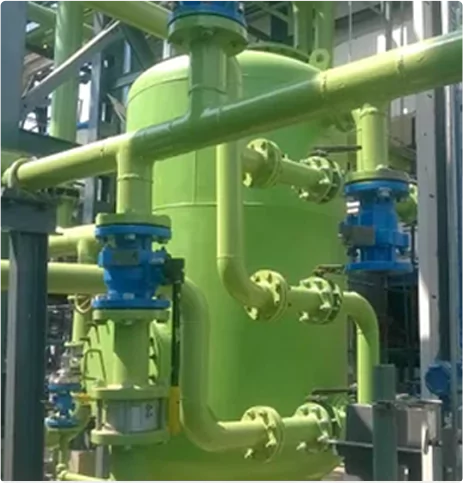
A Side Stream Filter is a filtration system that continuously removes suspended solids, dirt, algae, rust, and other contaminants from a portion of the circulating cooling tower water.
Why is a Side Stream Filter used in a cooling tower?
It helps maintain clean circulating water, improves heat transfer efficiency, reduces scaling and fouling, and extends the life of cooling tower equipment.
How does a Side Stream Filter work?
A small percentage of the cooling tower water is diverted through the filter, cleaned, and then returned to the cooling tower basin.
What percentage of water is filtered?
Typically 5% to 15% of the total circulating flow is filtered continuously, depending on water quality and system requirements.
What contaminants does a Side Stream Filter remove?
- Suspended solids
- Dust and dirt
- Sand and silt
- Corrosion particles
- Algae and biological debris
- Scale flakes
What are the benefits of Side Stream Filtration?
- Cleaner cooling water
- Better heat transfer
- Reduced chemical consumption
- Lower maintenance cost
- Reduced scaling and fouling
- Longer equipment life
- Improved cooling tower efficiency
Is a Side Stream Filter mandatory for cooling towers?
It is not always mandatory, but it is highly recommended for industrial cooling towers, especially where dust, suspended solids, or process contamination is high.
What type of filter media is used?
Common media include:
- Quartz sand
- Multi-grade media
- Garnet
- Activated media (for special applications)
What is the difference between a Side Stream Filter and a Pressure Sand Filter?
A Pressure Sand Filter usually treats a dedicated water stream, while a Side Stream Filter is specifically designed to continuously clean a portion of the cooling tower circulating water.
Can Side Stream Filtration reduce scaling?
Yes. By removing suspended particles that act as nucleation sites, it helps reduce scale formation.
Can it reduce biological growth?
It helps remove algae and organic debris, but biocide treatment is still required for proper biological control.
What is the recommended micron level?
Typical filtration ranges from 10 to 50 microns, depending on cooling tower requirements.
How do I select the capacity of a Side Stream Filter?
Selection depends on:
- Total cooling tower circulation rate
- Water quality
- Dust load
- Desired filtration efficiency
- Operating hours
What is the pressure drop across the filter?
A clean filter usually has a low pressure drop. Pressure increases as the media becomes dirty.
How often is backwashing required?
Backwash frequency depends on suspended solids load and operating conditions. It may be automatic or manual.
What is automatic backwash?
Automatic backwash uses valves and a controller/PLC to clean the filter media without stopping the system.
Can the filter operate continuously?
Yes. Side Stream Filters are designed for continuous operation in cooling tower systems.
What materials are available?
- FRP
- Mild Steel Epoxy Painted (MSEP)
- SS304
- SS316
Is FRP suitable for cooling tower water?
Yes. FRP is commonly used for cooling tower applications due to its corrosion resistance and low maintenance.
What maintenance is required?
- Check pressure gauges
- Inspect valves
- Verify backwash operation
- Check media condition
- Clean strainers and nozzles periodically
How long does the filter media last?
Typically 2 to 5 years, depending on water quality and operating conditions.
Can Side Stream Filtration reduce chemical consumption?
Yes. Cleaner water often reduces the requirement for dispersants, biocides, and scale-control chemicals.
Does it improve heat exchanger performance?
Yes. Reduced fouling leads to better heat transfer and lower energy consumption.
Can it be used with closed-loop systems?
Yes, though side stream filtration is more commonly used in open cooling tower systems.
What is the difference between Side Stream Filtration and Full Flow Filtration?
| Side Stream |
Full Flow |
| Filters 5-15% flow |
Filters 100% flow |
| Lower cost |
Higher cost |
| Common for cooling towers |
Used for critical applications |
Can it remove dissolved salts (TDS)?
No. Side Stream Filters remove suspended solids, not dissolved salts. TDS control requires blowdown and makeup water management.
What is the typical operating pressure?
Usually 2 to 5 kg/cm², depending on system design.
Is PLC automation available?
Yes. Side Stream Filters can be supplied with:
- PLC
- HMI
- Auto backwash
- Differential pressure control
- Timer-based operation
What are signs that the filter needs backwashing?
- Increased pressure drop
- Reduced flow
- Dirty return water
- Frequent fouling in the cooling tower
Can Side Stream Filtration help achieve water savings?
Yes. Cleaner water can reduce blowdown frequency and improve overall cooling tower water management.
Which industries commonly use Side Stream Filters?
- Chemical
- Pharma
- Textile
- Power plants
- HVAC systems
- Food processing
- Engineering industries
- Plastic and packaging industries
Why choose Vasudev Water Solution for Side Stream Filters?
- Customized design for cooling towers
- FRP / MSEP / SS construction
- Automatic backwash systems
- PLC-based automation
- Low maintenance design
- Service support in Vapi, Silvassa, Daman, Gujarat & Maharashtra