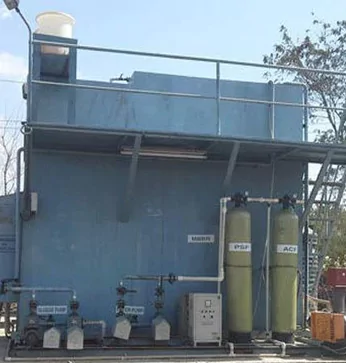
What is an ETP plant?
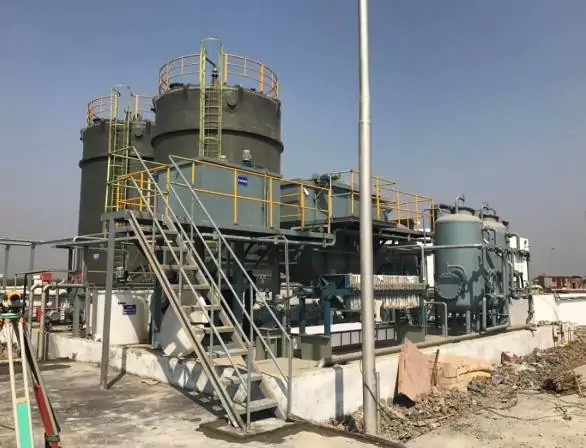
An ETP (Effluent Treatment Plant) is used to treat industrial wastewater by removing chemicals, oil, grease, suspended solids, and harmful pollutants before discharge or reuse.
Why is an ETP required?
ETP is required to comply with pollution control board norms and to reduce environmental impact from industrial wastewater.
What is the difference between ETP and STP?
ETP treats industrial effluent, while STP treats domestic sewage from toilets, kitchens, and bathrooms.
Can treated ETP water be reused?
Yes. Treated water can be reused for cooling towers, floor washing, gardening, utilities, or further RO treatment, depending on water quality.
Which industries need an ETP plant?
Common industries include:
- Chemical
- Pharma
- Textile
- Food & beverage
- Electroplating
- Paint
- Dye & pigment
- Engineering
- Packaging
What parameters are removed in an ETP?
An ETP can reduce:
- COD
- BOD
- TSS
- Oil & Grease
- Color
- Heavy metals
- pH imbalance
How does an ETP plant work?
Typical process:
- Collection tank
- Equalization tank
- pH correction
- Chemical treatment
- Primary settling
- Biological treatment (if required)
- Secondary settling
- Filtration / RO / reuse
What is the ideal pH for ETP operation?
Generally, pH 6.5 to 8.5 is maintained for effective treatment.
How often should sludge be removed?
Sludge removal depends on effluent load and chemical usage. Regular desludging is necessary to maintain treatment efficiency.
What is COD in wastewater?
COD (Chemical Oxygen Demand) indicates the amount of oxygen required to oxidize organic and chemical pollutants in water.
What is BOD in wastewater?
BOD (Biochemical Oxygen Demand) measures biodegradable organic matter present in wastewater.
Can ETP reduce COD from 5000 ppm to below 250 ppm?
Yes, with proper chemical and biological treatment, significant COD reduction is possible depending on wastewater characteristics.
What is Zero Liquid Discharge (ZLD)?
ZLD is a system where wastewater is treated and recovered, and no liquid is discharged outside the plant.
How much space is required for an ETP?
Space depends on capacity, technology, and wastewater quality. Compact skid-mounted systems are available for smaller capacities.
What is the power consumption of an ETP?
Power consumption depends on pumps, blowers, agitators, and automation level.
Is automation available in ETP plants?
Yes. ETP plants can be supplied with PLC, HMI, auto dosing, pH control, and remote monitoring.
What maintenance is required?
Regular maintenance includes:
- Pump checking
- Blower inspection
- pH calibration
- Sludge removal
- Filter cleaning
- Chemical dosing check
What happens if ETP is not operated properly?
Poor operation can cause:
- High COD/BOD
- Bad odor
- Sludge overflow
- Non-compliance with GPCB/CPCB norms
- Reuse problems
Can ETP water be sent to an RO plant?
Yes. After proper pretreatment and reduction of TSS, oil, and scaling compounds, ETP-treated water can be fed to an RO system.
How do I select the right ETP plant?
Selection depends on:
- Flow (KLD)
- COD/BOD level
- Oil & grease
- pH
- TDS
- Reuse requirement
- Available space
- Budget
What is the capacity of an ETP plant?
ETP capacity is measured in KLD (Kilo Litres per Day) or m³/day. Common capacities range from 5 KLD to 500 KLD or more.
What is an equalization tank in an ETP?
An equalization tank collects wastewater and maintains uniform flow, pH, and pollutant concentration before treatment.
Why is pH correction important in ETP?
Correct pH improves chemical reactions, coagulation, flocculation, and biological treatment performance.
What chemicals are used in ETP?
Common chemicals include:
- Lime
- Caustic soda
- Alum
- PAC
- Polyelectrolyte
- Sodium hypochlorite
- Acid for pH correction
What is coagulation and flocculation?
Coagulation destabilizes suspended particles, while flocculation forms larger flocs that can settle easily.
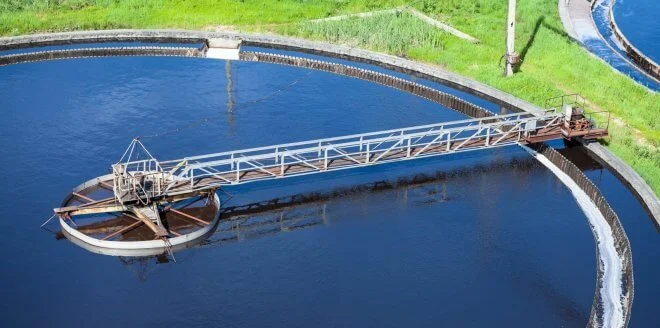
What is a primary clarifier?
A primary clarifier separates heavy suspended solids and chemical flocs from wastewater by gravity settling.
What is biological treatment in ETP?
Biological treatment uses microorganisms to degrade dissolved organic pollutants and reduce BOD and COD.
What is the difference between aerobic and anaerobic treatment?
| Aerobic |
Anaerobic |
| Requires oxygen |
Works without oxygen |
| Lower odor |
Higher odor |
| Faster treatment |
Slower treatment |
| Used for low-medium COD |
Used for high COD wastewater |
What is MBBR technology in ETP?
MBBR (Moving Bed Biofilm Reactor) uses floating media for biological growth, offering compact size and stable performance.
What is SBR technology?
SBR (Sequencing Batch Reactor) treats wastewater in fill, react, settle, decant, and idle cycles within a single tank.
What is MBR technology?
MBR combines biological treatment with membrane filtration to produce very high-quality treated water suitable for reuse.
Can ETP remove color from wastewater?
Yes. Color can be reduced using coagulation, activated carbon, oxidation, or membrane treatment.
Can ETP remove oil and grease?
Yes. Oil & grease are removed using oil traps, DAF systems, skimmers, and chemical treatment.
What is a DAF system?
DAF (Dissolved Air Flotation) removes oil, grease, and light suspended solids by floating them to the surface.
What is sludge in an ETP?
Sludge is the concentrated solid waste generated during chemical and biological treatment.
How is ETP sludge handled?
Sludge is usually treated through:
- Sludge holding tank
- Filter press
- Centrifuge
- Drying bed
- Authorized disposal
What is a filter press?
A filter press dewaters sludge and converts it into semi-dry cake for easy handling and disposal.
What is tertiary treatment?
Tertiary treatment is the final polishing step using:
- Pressure sand filter
- Activated carbon filter
- UF
- RO
- Disinfection
Why is activated carbon used in ETP?
Activated carbon removes odor, color, and residual organic compounds.
What is the role of a pressure sand filter?
It removes fine suspended solids and turbidity from treated water.
Can ETP reduce TDS?
Conventional ETP has limited effect on TDS. RO, evaporation, or ZLD systems are required for significant TDS reduction.
What is RO in wastewater treatment?
RO (Reverse Osmosis) removes dissolved salts and enables water recovery and reuse.
What is high recovery RO for ETP?
High recovery RO maximizes water recovery, typically 75-90% depending on wastewater quality.
What is RO reject management?
RO reject can be treated by:
- Multiple-effect evaporator (MEE)
- ATFD
- Solar evaporation
- ZLD system
What is MEE?
MEE (Multiple Effect Evaporator) concentrates high-TDS wastewater using steam energy.
What is ZLD in industrial wastewater?
ZLD recovers maximum water and converts dissolved solids into solid waste with no liquid discharge.
How much treated water can be recovered?
Recovery depends on the process. ETP + RO systems may achieve 70-90% overall water recovery.
What instruments are used in an ETP?
Common instruments:
- pH meter
- Flow meter
- Pressure gauge
- DO meter
- ORP meter
- TDS meter
- Level switch
What is PLC automation in ETP?
PLC automation controls pumps, blowers, valves, dosing systems, and alarms automatically.
Can ETP be operated remotely?
Yes. Modern ETPs support remote monitoring through HMI, SCADA, or mobile connectivity.
What are common ETP operating problems?
- High COD in outlet
- Foaming
- Bad smell
- Excess sludge
- Pump failure
- Blower failure
- pH fluctuation
Why does foaming occur in biological tanks?
Foaming may occur due to surfactants, high F/M ratio, filamentous bacteria, or toxic shock load.
Why is there a bad odor from ETP?
Odor usually indicates anaerobic conditions, sludge accumulation, or insufficient aeration.
How often should ETP water be tested?
Critical plants should test daily or weekly depending on regulatory requirements.
Which standards apply to ETP discharge?
In Gujarat, discharge standards are generally governed by GPCB/CPCB norms and local consent conditions.
Can ETP help in water saving?
Yes. Reuse of treated wastewater can significantly reduce freshwater consumption and water cost.
What is the life of an ETP plant?
With proper maintenance, civil structures may last 20+ years and equipment 5-15 years.
Is AMC available for ETP plants?
Yes. Annual Maintenance Contracts typically include operation support, chemical guidance, servicing, and troubleshooting.
Why choose Vasudev Water Solution for ETP?
- Customized ETP design
- MBBR / SBR / DAF / RO / ZLD solutions
- PLC automation
- Installation & commissioning
- Service support in Vapi, Silvassa, Daman, Gujarat & Maharashtra