What is a DM Plant?
A DM (Demineralization) Plant removes dissolved salts, minerals, and ions from water to produce high-purity demineralized water.
What is DM water?
DM water is water with very low dissolved mineral content, typically having very low conductivity and TDS.
Why is a DM Plant required?
It is used where mineral-free water is required for:
- Boilers
- Pharmaceuticals
- Laboratories
- Power plants
- Electronics
- Battery manufacturing
- Chemical industries
How does a DM Plant work?
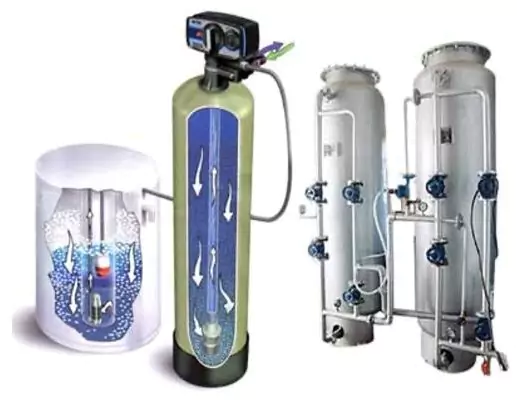
A typical DM plant uses ion exchange resins to remove cations and anions from water.
What are the main components of a DM Plant?
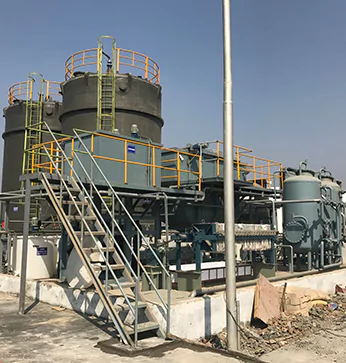
- Raw water tank
- Pressure sand filter
- Activated carbon filter
- Cation exchanger
- Degasser (optional)
- Anion exchanger
- Mixed bed polisher
- DM water tank
What is a cation exchanger?
It removes positively charged ions such as calcium, magnesium, sodium, and iron.
What is an anion exchanger?
It removes negatively charged ions such as chloride, sulfate, nitrate, and silica.
What is a Mixed Bed (MB) unit?
A Mixed Bed contains both cation and anion resins mixed together and is used for final polishing to achieve very high purity water.
What is the difference between DM and RO water?
| RO Water |
DM Water |
| Membrane process |
Ion exchange process |
| Reduces TDS |
Removes ions almost completely |
| Moderate purity |
Very high purity |
Which is better, RO or DM?
It depends on the application. For boilers and high-purity industrial use, DM water is usually preferred. RO is often used as a pretreatment before DM.
What is the conductivity of DM water?
Typically 0.1 to 10 µS/cm, depending on plant design and resin condition.
What is the TDS of DM water?
Usually less than 5 ppm, and with mixed bed polishing it can be below 1 ppm.
Can DM water be used for drinking?
DM water is not recommended for regular drinking because it lacks essential minerals.
What is regeneration in a DM Plant?
Regeneration restores the ion exchange capacity of exhausted resins using chemicals.
Which chemicals are used for regeneration?
- Hydrochloric Acid (HCl) or Sulfuric Acid for cation resin
- Caustic Soda (NaOH) for anion resin
How often is regeneration required?
It depends on:
- Feed water TDS
- Plant capacity
- Water consumption
- Resin quantity
What is resin in a DM Plant?
Resin is a specially designed ion exchange material that removes dissolved ions from water.
How long does DM resin last?
Typically 3 to 5 years with proper pretreatment and regeneration.
What causes resin fouling?
- Iron
- Oil and grease
- Organic matter
- Chlorine attack
- Suspended solids
Why is activated carbon used before DM?
It removes chlorine and organic matter, which can damage ion exchange resins.
Why is a pressure sand filter required?
It removes suspended solids and turbidity, protecting downstream equipment and resin.
Can hard water be fed directly to a DM Plant?
It is not recommended. Water softening or proper pretreatment improves DM performance and resin life.
What is silica leakage?
Silica leakage means silica is passing through the anion or mixed bed unit, usually indicating resin exhaustion or improper regeneration.
What is a degasser tower?
A degasser removes carbon dioxide (CO₂) after the cation exchanger, reducing caustic consumption in the anion unit.
What is a Two Bed DM Plant?
It consists of:
- One cation exchanger
- One anion exchanger
What is a Mixed Bed DM Plant?
It is a polishing unit installed after the two-bed system for achieving ultra-low conductivity water.
What is the recovery of a DM Plant?
DM plants do not have recovery like RO systems. Water is consumed during service and regeneration stages.
What is the difference between Softener and DM Plant?
| Softener |
DM Plant |
| Removes hardness |
Removes all dissolved ions |
| Uses NaCl |
Uses acid and caustic |
| Moderate quality water |
High purity water |
What maintenance is required?
- Check conductivity
- Check flow rate
- Monitor regeneration
- Inspect valves
- Check resin level
- Clean strainers
What are common problems in DM Plants?
- High conductivity
- Low flow
- Resin carryover
- Silica leakage
- Channeling
- Poor regeneration
Why is DM water conductivity increasing?
Possible causes:
- Exhausted resin
- Improper regeneration
- Resin fouling
- Internal leakage
- High feed water TDS
Can DM water be stored?
Yes, preferably in closed FRP, HDPE, or SS tanks to avoid contamination.
What material is used for DM water piping?
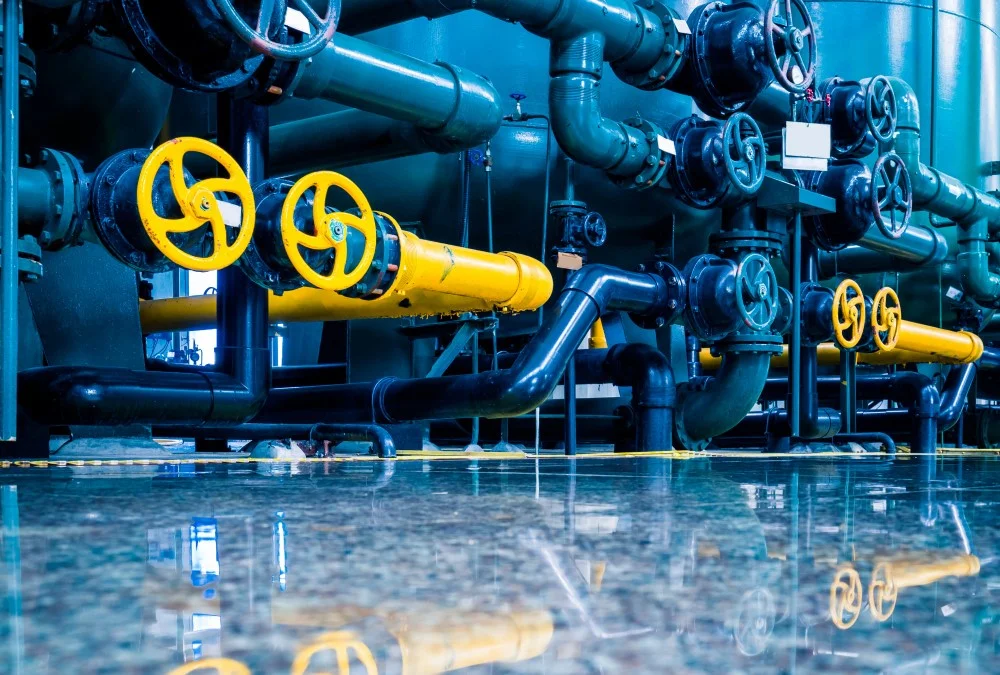
- UPVC
- CPVC
- PP
- PVDF
- SS316L (for high purity systems)
Is automation available for DM Plants?
Yes. DM plants can be supplied with:
- PLC
- HMI
- Auto regeneration
- Conductivity control
- Flow monitoring
What is the power consumption of a DM Plant?
Power is mainly consumed by feed pumps and transfer pumps, and is generally lower than RO systems.
Can RO be used before DM?
Yes. RO + DM + Mixed Bed is a very common arrangement for high-purity water systems.
What is the life of a DM Plant?
- Civil/FRP vessels: 10-20 years
- Valves and instruments: 5-10 years
- Resin: 3-5 years
Which industries use DM Plants?
- Pharmaceutical
- Power
- Boiler feed
- Chemical
- Electronics
- Automobile
- Food & Beverage
- Laboratories
Why choose Vasudev Water Solution for DM Plants?
- Customized DM design
- Two Bed and Mixed Bed systems
- FRP / MSEP / SS construction
- PLC automation
- Low conductivity guarantee
- Installation & commissioning support
- Service in Vapi, Silvassa, Daman, Gujarat & Maharashtra